
5 Exciting Cancer Advances from ASCO 2026

Every year, cancer specialists from around the world gather at the American Society of Clinical Oncology (ASCO) Annual Meeting to share the latest advances in cancer research and treatment. While many of the presentations are highly scientific, the overall message from ASCO 2026 was encouraging: cancer care continues to become more personalized, more precise, and more effective.
Here are five exciting developments that caught our attention this year.

1. A New Targeted Therapy Offers Hope in Pancreatic Cancer
Pancreatic cancer has long been one of the most challenging cancers to treat, making any advancement especially meaningful. One of the most talked-about presentations at ASCO 2026 involved the investigational KRAS inhibitor daraxonrasib for patients whose tumors contain a KRAS mutation.
Researchers reported improved outcomes compared with standard chemotherapy, providing hope that precision medicine may continue to expand treatment options for patients with pancreatic cancer.
Why this matters: More patients are benefiting from molecular testing, which can identify specific genetic changes within a tumor. These results highlight how understanding the biology of a cancer can lead to more personalized and effective treatments.
2. Blood Tests May Help Detect Cancer Recurrence Earlier
Another exciting area of research focused on circulating tumor DNA (ctDNA), sometimes called minimal residual disease (MRD) testing. These highly sensitive blood tests can detect tiny amounts of cancer DNA that may remain in the body after treatment, often before anything appears on a scan.
Several studies in colorectal cancer presented at ASCO explored how ctDNA testing could help identify patients at higher risk for recurrence and potentially guide decisions about who may benefit from additional treatment. Researchers continue to investigate whether these blood tests can be used to personalize treatment intensity and surveillance strategies.
Why this matters: In the future, a simple blood test may help doctors personalize follow-up care, identify recurrence earlier, and better determine which patients need additional therapy and which may safely avoid it.
3. Advanced Immunotherapy May Be Easier to Receive Closer to Home
Researchers presented encouraging data from the EPCORE NHL-6 study, which evaluated epcoritamab, a bispecific antibody immunotherapy, in patients with newly diagnosed diffuse large B-cell lymphoma (DLBCL). Bispecific antibodies help the body's immune system recognize and attack cancer cells by connecting immune cells directly to the lymphoma.
In addition to demonstrating promising effectiveness, the study showed that treatment could often be delivered in an outpatient setting with appropriate monitoring. This represents an important step toward making these innovative therapies more accessible to patients without requiring prolonged hospital stays.
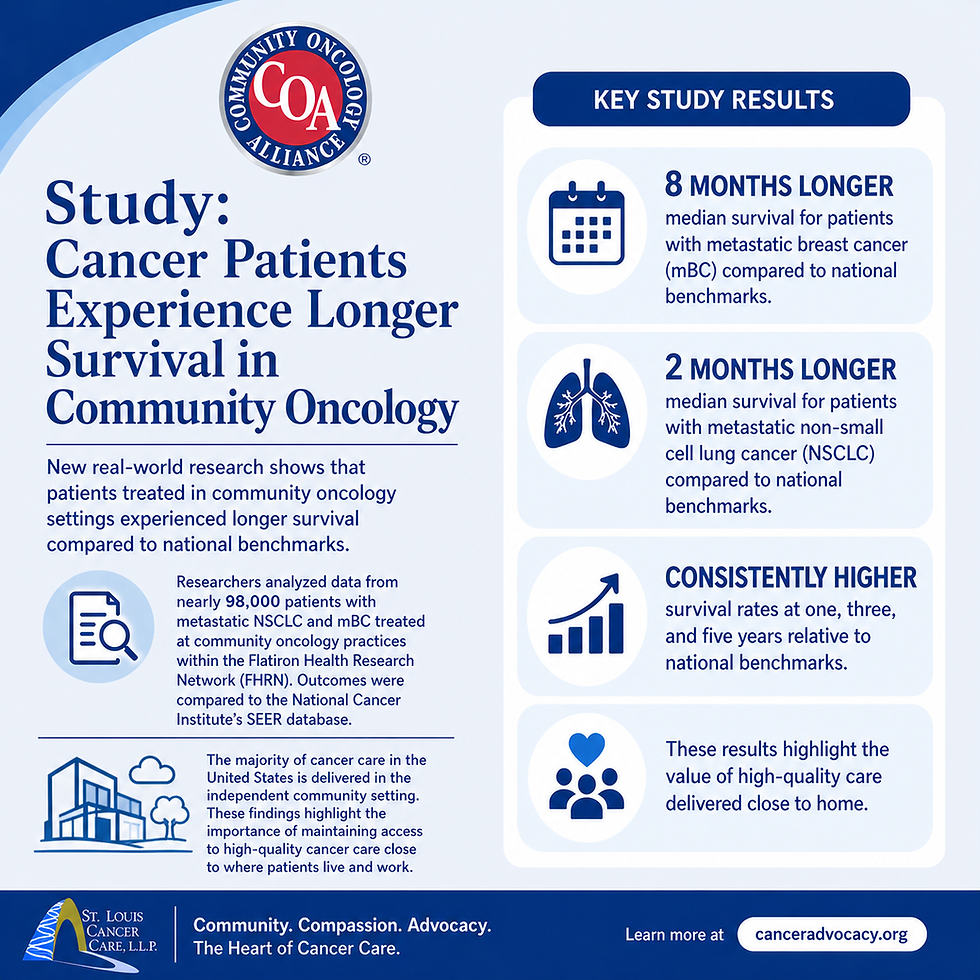
Why this matters: Some of the most advanced cancer treatments are increasingly being delivered in community oncology practices. For patients, that can mean receiving cutting-edge therapies closer to home, closer to family, and with fewer disruptions to daily life.
4. "Smart Chemotherapy" Is Moving Into Earlier-Stage Breast Cancer
Antibody-drug conjugates (ADCs) were once again among the most discussed topics at ASCO. These treatments are sometimes described as "smart chemotherapy" because they use an antibody to locate cancer cells and deliver a cancer-fighting drug directly to them.
One notable presentation involved Enhertu, which demonstrated benefits in patients with HER2-positive early-stage breast cancer who still had residual disease after receiving treatment before surgery.
The findings build on a growing body of evidence showing that ADCs are no longer being used only in advanced cancers but are increasingly being studied earlier in the treatment journey, where they may help reduce the risk of recurrence and improve long-term outcomes.
Why this matters: Targeted therapies such as Enhertu are helping improve outcomes while delivering treatment more precisely to cancer cells. Many experts believe ADCs will continue to transform cancer care in the years ahead.
5. Immunotherapy Is Moving Earlier in the Cancer Journey
Immunotherapy has already transformed treatment for many advanced cancers. At ASCO 2026, researchers presented additional evidence supporting the use of immunotherapy in earlier-stage disease, including melanoma, bladder cancer, and mismatch repair-deficient (dMMR) colon cancer.
Several studies demonstrated that using immunotherapy before or after surgery may help reduce the risk of recurrence and improve long-term outcomes. Researchers continue to investigate which patients are most likely to benefit and how these treatments can be incorporated into earlier stages of care.
Why this matters: Treatments that were once reserved for advanced disease are increasingly helping patients with earlier-stage cancers, with the goal of preventing cancer from returning and improving the chances of cure.
Looking Ahead
One of the most encouraging messages from ASCO 2026 is that progress is occurring across many different types of cancer. From targeted therapies and innovative blood tests to immunotherapy and next-generation drug development, researchers continue to find new ways to improve outcomes while personalizing care for each patient.
At St. Louis Cancer Care, we remain committed to staying current with the latest advances in oncology and bringing evidence-based, compassionate care to the patients and families we serve.


Comments